
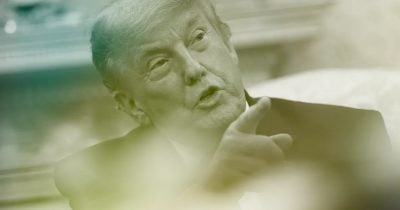
Former President Donald Trump has signaled a possible escalation of U.S. military action against Iran, a development that comes as Israel has publicly warned of a severe retaliation if Tehran is targeted. While the immediate focus is on the diplomatic and security implications of such a move, the ripple effects are already being felt across the cryptocurrency sector, especially within the meme‑coin niche that is highly sensitive to sudden shifts in global risk sentiment.
Geopolitical risk has long been a catalyst for volatility in crypto markets, and meme coins are no exception. When headlines suggest a widening conflict, investors often seek assets that can either hedge against traditional market downturns or offer rapid, speculative upside. The recent statements from Trump have reignited concerns about a broader Middle‑East confrontation, prompting traders to reassess exposure to high‑beta tokens such as Shiba Inu, Dogecoin, and newer community‑driven projects that thrive on social media hype.
Historically, periods of heightened tension in the Middle East have coincided with spikes in crypto trading volume, as market participants react to uncertain fiat‑currency environments. In 2020, for example, escalations between the United States and Iran corresponded with a temporary surge in Bitcoin and Ethereum prices, while meme‑coin markets experienced amplified price swings driven by retail speculation. The current scenario mirrors those patterns, suggesting that any further expansion of strikes could trigger a similar cascade of activity across decentralized finance platforms.
From a DeFi perspective, meme coins are often traded on automated market makers (AMMs) that rely on liquidity pools funded by retail users. An abrupt change in risk appetite can cause liquidity providers to withdraw capital, leading to slippage and price distortion. Moreover, the speculative nature of meme tokens means that social‑media sentiment can shift dramatically within minutes, amplifying the impact of news cycles that revolve around geopolitical events. This dynamic underscores the importance of risk management tools, such as stop‑loss orders and portfolio diversification, for investors who hold meme‑coin positions during periods of uncertainty.
Another layer of complexity arises from the potential regulatory response. A heightened conflict could prompt governments to tighten capital controls, increase scrutiny of crypto exchanges, and accelerate the implementation of anti‑money‑laundering (AML) measures. Such regulatory tightening typically dampens the enthusiasm for low‑utility tokens, as compliance costs rise and exchange listings become more restrictive. In this environment, meme‑coin projects with strong community governance and transparent tokenomics may be better positioned to weather regulatory headwinds.
Investors should also consider the macro‑economic backdrop. The United States is projected to allocate significant funding for Iranian reconstruction in a prospective 2026 agreement, a factor that could influence long‑term fiscal policy and, by extension, the broader crypto market. While the direct link between reconstruction financing and meme‑coin valuation is tenuous, the overall perception of fiscal stability can affect the appetite for risk‑on assets, including speculative tokens that dominate the meme‑coin space.
In practical terms, traders looking to navigate the upcoming turbulence should monitor key indicators such as the CBOE Crude Oil Volatility Index (OVX), which often correlates with geopolitical stress, and on‑chain metrics like token holder concentration and liquidity depth on leading AMM platforms. By correlating these data points with social‑media sentiment analysis, market participants can develop a more nuanced view of how meme‑coin prices might respond to the evolving situation.
In summary, the prospect of expanded U.S. strikes against Iran, coupled with Israel’s warning of retaliation, introduces a fresh wave of geopolitical risk that is likely to reverberate through the meme‑coin sector. While the ultimate impact will depend on the scale and duration of any conflict, the immediate market response is expected to be characterized by heightened volatility, shifting liquidity dynamics, and increased scrutiny from regulators. Savvy investors will therefore need to balance short‑term speculative opportunities with robust risk‑mitigation strategies to preserve capital amid an unpredictable geopolitical landscape.

