
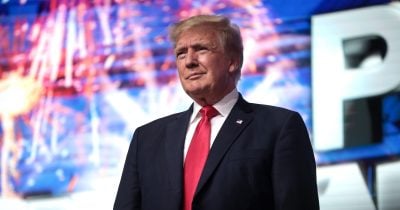
The United States has signaled an imminent and forceful response to the recent Iranian missile attack that struck American forces stationed abroad. President Trump, addressing the nation, emphasized that any aggression against U.S. troops will be met with decisive military action, underscoring a policy of zero tolerance for threats to American personnel. This declaration arrives at a time when geopolitical tensions are already high across the Middle East, and it carries significant implications for both regional stability and global financial markets.
Simultaneously, the U.S. Treasury Department announced the seizure of approximately $130 million in cryptocurrency holdings linked to entities believed to be supporting Iran’s missile program. The assets, which were held across multiple blockchain platforms, were frozen under existing sanctions authority, highlighting the growing role of digital currencies in the enforcement of international financial controls. By targeting crypto assets, regulators aim to close loopholes that have historically allowed sanctioned actors to evade traditional banking restrictions.
Analysts note that the combined military and financial response signals a broader strategy to pressure Iran through multiple channels. The Treasury’s action demonstrates an expanding toolkit for combating illicit finance, where blockchain analytics firms are increasingly called upon to trace and identify sanctioned wallets. This development is likely to accelerate compliance efforts within the decentralized finance (DeFi) ecosystem, as platforms will need to implement more robust know‑your‑customer (KYC) and anti‑money‑laundering (AML) protocols to avoid becoming conduits for sanctioned funds.
From an economic perspective, the escalation threatens to disrupt global oil markets, which are already sensitive to supply‑side shocks. Iran’s missile capabilities have historically been a factor in oil price volatility, and any further conflict could curtail production or transport routes, driving up prices and affecting energy‑dependent economies worldwide. Investors are closely monitoring the situation, as heightened risk premiums could lead to capital flight from emerging markets and a reallocation of assets toward perceived safe‑havens such as gold and the U.S. dollar.
Moreover, the Treasury’s freeze of crypto assets underscores the importance of regulatory clarity for digital asset participants. Cryptocurrency exchanges operating in the United States are now faced with heightened scrutiny, requiring them to adopt advanced screening tools that can detect sanctioned addresses in real time. Failure to comply could result in substantial fines, loss of licenses, or forced shutdowns, which would reverberate across the broader blockchain sector.
In the context of DeFi, the incident raises questions about the efficacy of decentralized protocols in preventing illicit use. While the open‑source nature of DeFi platforms offers transparency, it also presents challenges for enforcement agencies that lack direct control over smart contracts. Industry leaders are therefore urged to collaborate with regulators, develop voluntary standards, and integrate on‑chain monitoring solutions that can flag suspicious activity without compromising user privacy.
Overall, the United States’ dual approach of military readiness and financial enforcement reflects a comprehensive effort to deter further aggression and to limit Iran’s ability to fund its missile program through emerging financial technologies. Stakeholders across the geopolitical, energy, and crypto landscapes should prepare for heightened volatility and anticipate stricter compliance requirements as authorities continue to leverage blockchain analytics in the fight against sanctions evasion.

