
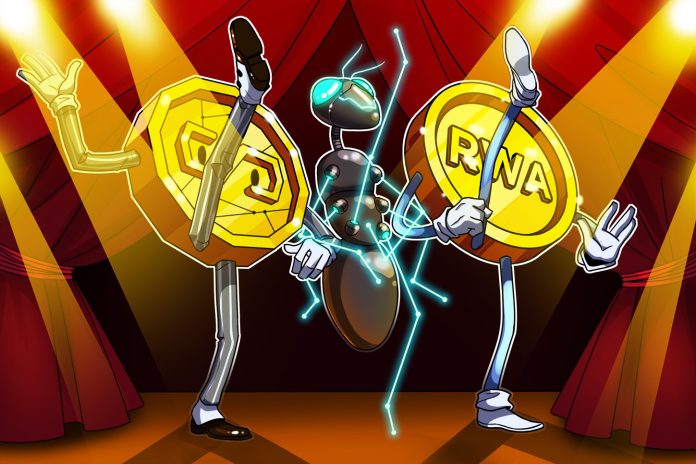
Tx, the high‑throughput blockchain built for decentralized finance, has announced the deployment of a new stablecoin called USTX. The token is designed to bridge the gap between traditional finance and the blockchain ecosystem by enabling real world asset (RWA) liquidity to flow directly onto Tx’s network. USTX is minted against USDC, one of the most widely used dollar‑pegged stablecoins, and can be created on eight separate blockchain networks, giving users a flexible and interoperable solution for moving capital across layers.
The strategic decision to anchor USTX to USDC reflects a broader industry trend toward leveraging well‑established stablecoins as a foundation for new financial products. By allowing minting from multiple USDC bridges, Tx reduces friction for participants who hold USDC on Ethereum, Solana, Avalanche, Polygon, Binance Smart Chain, Arbitrum, Optimism, and Fantom. This multi‑chain approach not only expands the potential user base but also enhances liquidity depth, which is essential for the settlement of tokenized securities and other high‑value assets.
One of the core use cases for USTX is the settlement of tokenized stocks, bonds, and commodity derivatives that have been digitized as blockchain assets. Traditionally, these instruments have suffered from limited on‑chain liquidity, forcing traders to rely on off‑chain custodians and fragmented order books. With USTX, market participants can lock in USDC, receive an equivalent amount of USTX, and use that stablecoin as a settlement medium for tokenized securities. This process simplifies trade execution, reduces counterparty risk, and lowers transaction costs compared with legacy settlement infrastructures.
Tx’s development team has also integrated a suite of smart contract modules that enforce compliance and auditability for RWA transactions. These modules verify that each tokenized asset is backed by a verifiable real‑world claim, ensuring that the underlying collateral is transparent and auditable. By embedding compliance checks directly into the protocol, Tx aims to satisfy regulatory expectations while preserving the decentralized ethos of the ecosystem.
From a macro perspective, the introduction of USTX signals a maturation of the DeFi landscape, where stablecoins are evolving beyond simple store‑of‑value instruments to become the backbone of complex financial workflows. Analysts predict that the ability to mint USTX with USDC from eight networks will attract institutional players seeking efficient cross‑chain liquidity solutions. Moreover, the token’s design aligns with the growing demand for real world asset tokenization, a sector that is projected to capture billions of dollars in new capital over the next few years.
Investors and developers should monitor the adoption metrics of USTX closely, as early indicators such as minting volume, on‑chain transaction count, and the variety of tokenized assets settled on Tx will provide insight into the stablecoin’s impact on RWA liquidity. As the ecosystem evolves, USTX could become a cornerstone for bridging fiat‑linked assets with decentralized markets, fostering a more inclusive and efficient financial system.

