
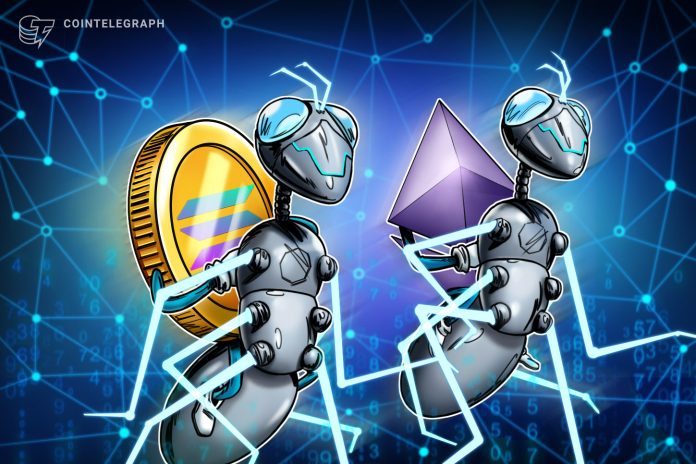
The first half of 2026 has seen a surge in crypto hack losses, with Ethereum and Solana being the most affected blockchain networks. According to recent reports, Ethereum remained the hardest-hit blockchain, while Solana replaced Arbitrum as the network with the second-highest losses. This trend is largely driven by key compromises, highlighting the need for improved security measures in the crypto space.
The rise of Solana as the second-most affected network is notable, as it indicates a shift in the tactics of hackers. Previously, Arbitrum was the primary target, but Solana’s growing popularity and adoption may have made it a more attractive target for malicious actors. This change in dynamics underscores the importance of continuous monitoring and adaptation in the crypto security landscape.
Ethereum’s position as the hardest-hit blockchain is not surprising, given its large user base and extensive ecosystem. The network’s complexity and openness make it a prime target for hackers, who can exploit vulnerabilities in smart contracts and other applications. However, it is worth noting that Ethereum’s developers and community are actively working to improve security, with initiatives such as the Ethereum Improvement Proposal (EIP) process and the development of new security tools.
The crypto hack losses experienced by Ethereum and Solana in the first half of 2026 serve as a reminder of the ongoing risks and challenges in the blockchain space. As the crypto market continues to evolve and grow, it is essential for users, developers, and platforms to prioritize security and take proactive measures to mitigate potential threats. This includes implementing robust security protocols, conducting regular audits and testing, and promoting awareness and education about crypto security best practices.
In terms of the broader implications, the crypto hack losses in the first half of 2026 may have a significant impact on the overall crypto market. Investors and users may become more cautious, leading to decreased adoption and lower prices. However, this could also accelerate the development of more secure and robust blockchain networks, driving innovation and growth in the long term. As the crypto space continues to mature, it is likely that we will see a greater emphasis on security, scalability, and usability, ultimately leading to a more resilient and reliable ecosystem.

