
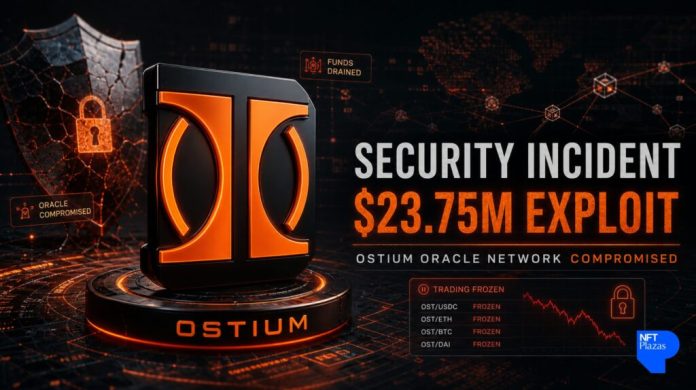
The decentralized finance sector has witnessed yet another major security incident, with Ostium, an on-chain perpetual trading protocol, announcing the pause of its trading activities due to a security breach. This move was made after a substantial amount of funds was drained from the protocol, with reports indicating that approximately $23.75 million in USDC was exploited. The breach has significant implications for the DeFi space, particularly given Ostium’s role in facilitating the trading of various assets, including stocks, commodities, and forex, under a self-custody model.
According to Ostium, the security incident occurred between 14:18 and 14:23 UTC, prompting the immediate pause of trading and the locking of relevant smart contracts. The protocol has assured users that their positions remain open, although they cannot be modified at present, and that traders’ margins remain untouched within the frozen contracts. While the technical cause of the breach and the recovery timeline have not been disclosed, the incident highlights the ongoing challenges faced by DeFi protocols in ensuring the security of user assets.
The exploitation of Ostium’s protocol resulted in the transfer of a large amount of USDC, which was subsequently swapped for over 12,000 ETH, valued at approximately $1,966 per ETH at the time of the transaction. The majority of these ETH were then transferred to Tornado Cash, a mixer service often used to launder illicitly obtained funds. This rapid movement of assets suggests a high level of sophistication on the part of the exploiters, who were able to quickly layer the funds to obscure their origin.
The incident has been tracked by various on-chain analytics services, including Lookonchain and Arkham, which have identified the movement of funds from Ostium to Tornado Cash, often via intermediary addresses. This complex flow of assets underscores the need for enhanced security measures and more effective tracking and tracing capabilities within the DeFi space. As the sector continues to evolve, the importance of robust security protocols and collaborative efforts to prevent and respond to such incidents will only continue to grow.
Ostium’s breach serves as a reminder of the risks inherent in the DeFi space, where the intersection of finance and blockchain technology creates both opportunities and challenges. The protocol’s self-custody model, designed to provide users with greater control over their assets, also introduces complexities in terms of security and risk management. As such, the incident will likely prompt a reevaluation of Ostium’s security measures and may have broader implications for the development of similar DeFi protocols.

