Absci Corporation, a pioneer in artificial intelligence-enabled drug discovery, has announced that its lead compound ABS‑201 has entered Phase I clinical trials. The milestone marks a significant step forward for the company’s platform that leverages machine learning to identify and optimize therapeutic candidates.
ABS‑201 targets a genetic driver that has been implicated in several solid tumors, including pancreatic and colorectal cancers. By focusing on a previously underexplored pathway, the drug aims to provide a new mechanism of action that could complement existing treatments. The Phase I study will evaluate safety, tolerability, and pharmacokinetics in patients with advanced solid tumors who have exhausted standard therapies.
Absci’s approach combines high‑throughput screening, deep‑learning models, and synthetic biology to accelerate the drug development pipeline. According to executives, the company’s proprietary platform can predict efficacy and toxicity profiles earlier in the discovery phase, reducing the time and cost associated with traditional drug development. The move to human trials underscores the growing confidence in AI‑driven pipelines within the broader biotech ecosystem.
Industry observers note that the transition from preclinical to clinical stages is often a bottleneck for AI‑based therapeutics. Regulatory agencies, including the FDA, have provided guidance on evaluating data generated by computational methods, but real‑world clinical outcomes remain the ultimate benchmark. Absci’s decision to proceed with a first‑in‑class candidate reflects both robust preclinical data and a strategic partnership with a leading clinical research organization.
In addition to the clinical trial, Absci is preparing to expand its platform’s capabilities across multiple disease areas. The company plans to integrate real‑world evidence and patient‑derived data to refine its predictive models further. By doing so, Absci aims to shorten the discovery cycle from years to months, potentially reshaping the competitive landscape for oncology therapeutics.
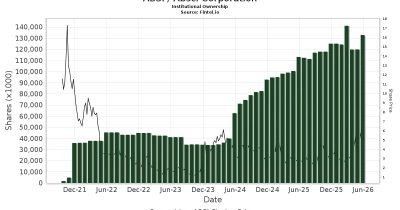
Financial analysts have responded positively to the announcement. Absci’s share price rose by 12% in after‑hours trading, reflecting investor optimism about the company’s growth trajectory. The funding round that supported the clinical program was led by a consortium of venture capital firms with a focus on biotechnology and AI innovation.
While the clinical data will ultimately determine ABS‑201’s therapeutic viability, the company’s progress signals a broader trend toward data‑driven drug discovery. As more firms adopt machine learning and advanced analytics, the industry may witness a shift toward shorter development timelines and more personalized treatment options.
For patients suffering from aggressive cancers, the prospect of new targeted therapies offers hope. Absci’s commitment to transparency and rigorous clinical evaluation will be essential as the company navigates the complexities of human trials. Stakeholders across the ecosystem-investors, regulators, and patient advocates-will be closely monitoring the outcomes of this pivotal Phase I study.
In summary, Absci’s entry of ABS‑201 into human trials represents a milestone for AI‑enabled drug discovery and signals a potential acceleration of therapeutic development timelines in oncology.