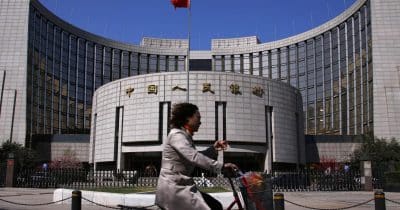
The People’s Bank of China (PBOC) initiated its first overnight reverse repurchase agreement, a tool that temporarily injects liquidity into the banking system, and chose not to disclose the rate applied. This decision has sparked debate among market participants who rely on transparent signals to gauge monetary policy direction.
Reverse repos, or ORRs, allow the central bank to absorb excess cash from banks in exchange for securities, effectively tightening liquidity for a short period. By keeping the rate undisclosed, the PBOC has introduced a new layer of uncertainty into the interbank market, where overnight rates are traditionally benchmarked against the central bank’s policy rate.
Market analysts suggest that this move may be an attempt to test the resilience of China’s financial system amid persistent inflationary pressure and the ongoing transition toward a more market‑driven economy. By withholding the exact terms, the central bank may be gauging how quickly banks adjust their funding costs and whether the policy signal aligns with the broader macro‑economic backdrop.
For global investors, the lack of transparency complicates risk assessment. The overnight rate is a key input for pricing derivatives, structuring syndicated loans, and calibrating expectations around future policy adjustments. When the rate is omitted from public releases, investors must rely on indirect indicators, such as changes in the yield curve or the behavior of market‑derived rates, which can lead to mispricing and heightened volatility.
Cryptocurrency markets have not been immune to the ripple effects. Bitcoin and Ethereum investors watch the Chinese liquidity environment closely, as changes in the domestic banking system can influence capital flows into or out of crypto assets. An opaque overnight rate may prompt speculation that the PBOC is preparing for a tightening cycle, potentially driving short‑term volatility in digital asset prices.
In the broader context of monetary policy, the decision to withhold the rate aligns with a growing trend of central banks experimenting with unconventional tools. Similar opaque measures have been observed in other major economies, where policymakers aim to preserve flexibility while minimizing market disruption. However, the PBOC’s approach remains distinct in its simultaneous use of a traditional tool-reverse repo-combined with a non‑transparent communication strategy.
Looking ahead, market participants will closely monitor subsequent ORR operations for any sign of change. If the PBOC later discloses the rate or adjusts the size of the operation, it could signal a shift toward more traditional policy communication. Conversely, repeated opaque releases may prompt calls for clearer guidelines from regulatory bodies, potentially leading to reforms in how central banks disclose monetary policy tools.
For the NFT ecosystem, which increasingly intersects with broader financial markets, this development underscores the importance of liquidity management and regulatory clarity. As NFT projects raise capital through token sales, they often rely on institutional lenders and crypto‑fi services that are sensitive to traditional banking conditions. A transparent liquidity environment enhances investor confidence and supports sustainable growth in the NFT market.