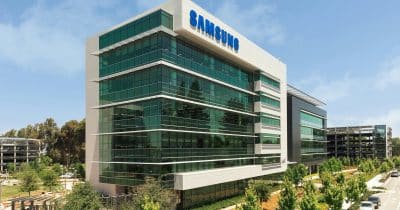
South Korea’s ambitious plan to invest up to $1.3 trillion in technology over the next decade signals a decisive shift in the global semiconductor landscape and offers a new engine for the rapidly evolving NFT ecosystem. By positioning Samsung Electronics and SK Hynix at the forefront of this initiative, the country is not only reinforcing its dominance in chip manufacturing but also laying the groundwork for advanced blockchain infrastructure that could benefit artists, collectors, and developers worldwide.
At the heart of the strategy lies a focus on next‑generation semiconductor fabrication, artificial intelligence, and quantum computing. Samsung’s commitment to expanding its 3 nm and 2 nm production lines will increase output capacity, reduce lead times, and lower the cost of high‑performance chips. Meanwhile, SK Hynix is set to push the envelope in DRAM and NAND flash technologies, ensuring that memory shortages do not hamper the growth of data‑intensive applications such as NFT marketplaces and decentralized finance platforms.
Beyond raw silicon, the plan incorporates significant investment in research and development across a spectrum of emerging technologies. Artificial intelligence, for instance, will drive smarter data analytics for NFT platforms, allowing creators to target niche audiences more precisely and enabling collectors to discover unique digital assets through advanced recommendation engines. Quantum computing research, meanwhile, could usher in a new era of secure transaction protocols, reducing the risk of fraud and boosting confidence in NFT ownership records.
One of the more subtle yet powerful implications of this investment is its potential to strengthen South Korea’s blockchain infrastructure. By funding state‑of‑the‑art data centers and high‑speed fiber networks, the government is creating an environment where blockchain nodes can operate with lower latency and higher throughput. This translates directly into faster minting times, lower transaction fees, and a more robust foundation for NFT marketplaces to scale globally.
Moreover, the increased availability of high‑performance computing resources will enable the creation of more sophisticated NFT experiences. Augmented and virtual reality projects that require real‑time rendering will become more accessible, while generative art tools powered by AI will benefit from faster training times. Artists and developers in South Korea will find themselves better equipped to compete on the international stage, potentially leading to a surge in Korean NFT projects that leverage cutting‑edge technology.
From a geopolitical standpoint, South Korea’s move also signals a strategic push to diversify the global supply chain. By strengthening domestic production of critical components, the country reduces its reliance on foreign suppliers, particularly those located in regions that have experienced geopolitical tension. This resilience is valuable for blockchain infrastructure, where uptime and reliability are paramount for maintaining trust in digital asset ownership.
Investors watching the market should note that the ripple effects of South Korea’s initiative extend beyond chipmakers. Funding flows into adjacent sectors-such as cloud computing, edge devices, and cybersecurity-will create new opportunities for venture capital in the NFT space. Startups that provide infrastructure-as-a-service for NFT platforms may find fresh capital as the government seeks to support digital innovation ecosystems.
In conclusion, South Korea’s $1.3 trillion technology investment is poised to reinforce its semiconductor supremacy while simultaneously unlocking new potential for the NFT industry. By enhancing chip production, advancing AI capabilities, and building a resilient blockchain backbone, the country is setting the stage for a more efficient, secure, and creative digital asset landscape that could benefit creators, collectors, and technologists worldwide.