
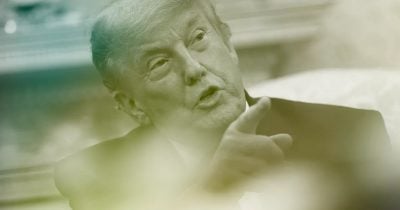
Former President Donald Trump has renewed accusations that the People’s Republic of China interfered in the 2020 United States election, a claim that reverberates across diplomatic circles and threatens to destabilize a tentative trade truce that has been under negotiation for months. While the allegation itself is not new, the timing of the statement, coming as Chinese President Xi Jinping prepares for a high‑profile visit to the United States, adds urgency to an already volatile geopolitical landscape.
For participants in the non‑fungible token (NFT) sector, the intersection of political risk and cross‑border commerce is more than a headline; it is a concrete factor that can shape market sentiment, liquidity, and regulatory scrutiny. NFTs, which rely on blockchain networks that often span multiple jurisdictions, are especially vulnerable to disruptions in trade policy and to the perception of heightened state‑level interference.
In recent weeks, the United States and China have made incremental progress toward a trade agreement that would reduce tariffs on a range of goods, ranging from electronics to raw materials used in the production of hardware wallets. The agreement also includes language that encourages cooperation on emerging digital assets, a clause that has been welcomed by DeFi platforms and NFT marketplaces seeking clearer regulatory guidance. Trump’s renewed claims could undermine the goodwill that has been built, prompting both governments to adopt a more defensive posture.
From an NFT perspective, the potential fallout can be examined through three primary lenses: market confidence, infrastructure stability, and compliance risk. First, market confidence is highly sensitive to macro‑level political narratives. When a former president publicly alleges foreign interference, investors often react by withdrawing from perceived riskier assets, including high‑profile NFT projects that have already faced volatility. Historical data from previous geopolitical shocks show a measurable dip in trading volume on major NFT platforms during periods of heightened tension.
Second, the underlying blockchain infrastructure that powers NFTs may encounter operational challenges if trade restrictions affect the supply chain of hardware components essential for miners and validators. A slowdown in the production of chips, for instance, could increase transaction fees and delay the minting of new NFTs, thereby reducing the overall attractiveness of the space for creators and collectors.
Third, compliance risk escalates when political rhetoric intensifies. Financial regulators in both the United States and China have signaled a willingness to tighten anti‑money‑laundering (AML) and know‑your‑customer (KYC) requirements for digital asset services. NFT platforms that operate across borders may be forced to implement more rigorous identity verification processes, potentially alienating users who value anonymity and could lead to a fragmentation of the market.
Analysts suggest that the NFT community should prepare for a scenario in which the trade truce is delayed or renegotiated under stricter terms. Diversifying exposure across multiple blockchain ecosystems, such as moving some assets from Ethereum to layer‑2 solutions or alternative chains with lower geopolitical exposure, can mitigate the impact of any sudden policy shifts. Moreover, engaging with legal counsel familiar with cross‑border digital asset regulations will become increasingly important for project teams seeking to navigate a more complex compliance environment.
While the immediate political drama may dominate headlines, the longer‑term implications for NFTs are rooted in the broader narrative of how nation‑states interact with decentralized technologies. The ongoing dialogue between the United States and China will likely set precedents for how future disputes are managed, influencing everything from the valuation of digital art to the design of interoperable standards that aim to reduce reliance on any single jurisdiction.
Stakeholders in the NFT space should monitor developments closely, as the outcome of this diplomatic friction will shape the strategic decisions that underpin the industry’s growth. By staying informed and adopting risk‑aware practices, creators, investors, and platforms can better weather the turbulence that accompanies high‑level political accusations.

