
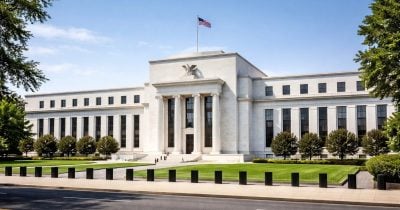
Bank of America has revised its outlook for the United States monetary policy, forecasting three incremental hikes by the Federal Reserve over the next twelve months. This projection aligns with the central bank’s ongoing effort to temper inflation while preserving economic momentum. For the blockchain ecosystem, each rate increase translates into tighter financial conditions that reverberate across DeFi protocols, crypto lending platforms, and the broader digital asset market.
The anticipated hikes are likely to raise the benchmark federal funds rate by roughly 75 basis points in total. Higher rates increase the cost of borrowing for traditional banks and, by extension, for crypto‑backed lenders that rely on fiat liquidity. DeFi platforms that offer variable‑rate loans or stablecoin yields will feel pressure as the risk‑adjusted return on capital shifts upward. Investors may demand higher yields to compensate for the elevated opportunity cost of capital, potentially driving a re‑pricing of stablecoin interest rates and a contraction in on‑chain loan volumes.
From a macroeconomic perspective, tighter monetary policy tends to dampen consumer spending and slow GDP growth. In the crypto sphere, reduced disposable income can curtail demand for speculative assets such as Bitcoin and Ethereum, leading to lower price momentum. Moreover, a stronger dollar, a common by‑product of rate hikes, often exerts downward pressure on crypto valuations expressed in fiat terms. Market participants should therefore monitor the dollar index as an indirect barometer of crypto price health.
One notable implication for decentralized finance is the potential shift in collateral dynamics. As traditional borrowing costs rise, users may seek to leverage their crypto holdings more aggressively to avoid higher fiat loan rates. This behavior could increase the utilization of over‑collateralized loan products on platforms like Aave and Compound, but it also raises systemic risk if asset prices experience volatility. Protocols that incorporate robust liquidation mechanisms and dynamic collateral ratios will be better positioned to navigate these stress scenarios.
Stablecoin ecosystems are not immune to the ripple effects of Federal Reserve policy. Many algorithmic and fiat‑backed stablecoins peg their value to the U.S. dollar, and higher rates can affect the yields generated on the underlying dollar‑denominated reserves. Yield‑bearing stablecoin vaults may need to adjust their strategies to maintain competitive returns, prompting a migration of capital toward higher‑yielding DeFi farms or traditional fixed‑income instruments. This migration could temporarily reduce the liquidity depth of stablecoin markets, influencing trading spreads and slippage on decentralized exchanges.
Investors and developers should also consider the impact on crypto mining operations. Elevated borrowing costs can increase the expense of financing new mining equipment, especially in regions where miners depend on short‑term loans. Higher electricity prices, coupled with rising capital costs, may compress profit margins for miners, potentially leading to a slowdown in hash‑rate growth. A decelerated hash‑rate expansion could affect network security and transaction processing times, especially for proof‑of‑work blockchains.
Strategically, participants in the blockchain industry can mitigate the adverse effects of Federal Reserve tightening by diversifying funding sources, employing hedging instruments, and optimizing on‑chain yield strategies. For example, utilizing cross‑chain liquidity bridges can allow lenders to access more favorable rates in jurisdictions with looser monetary conditions. Additionally, integrating interest‑rate swaps or futures contracts into DeFi protocols can provide a hedge against rising borrowing costs, preserving yield stability for users.
In summary, Bank of America’s forecast of three Fed rate hikes this year signals a period of heightened financial scrutiny for the crypto and DeFi sectors. The interplay between traditional monetary policy and decentralized finance will shape borrowing costs, asset valuations, and liquidity dynamics across the blockchain ecosystem. Stakeholders who proactively adapt to these macroeconomic shifts will be better equipped to sustain growth and protect investor capital in an evolving regulatory environment.

