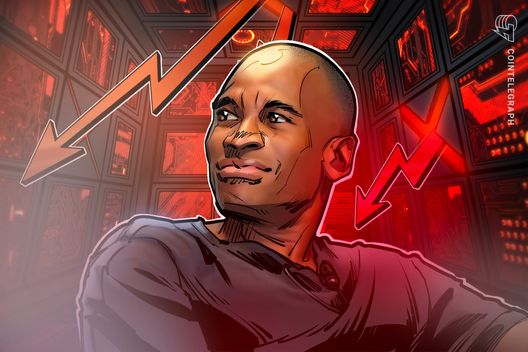
Arthur Hayes, co‑founder of the crypto‑centric investment firm Maelstrom, has intensified a series of token disposals just days after the firm unveiled its ambitious AI‑driven IPO proposal. The most recent move saw Hayes offload a notable portion of his holdings in Worldcoin (WLD), adding to a growing list of recent sales that includes HYPE, ZEC, and NEAR. This pattern has drawn attention from market observers who are parsing the timing and potential motivations behind the coordinated exits.
Maelstrom’s AI IPO pitch, presented at a closed‑door investor summit earlier this week, outlined a vision to launch a decentralized platform that leverages large‑language models for on‑chain governance and predictive analytics. The proposal emphasized a token‑based fundraising round aimed at attracting both traditional venture capital and crypto‑native investors. While the presentation generated buzz for its novel fusion of artificial intelligence and blockchain technology, it also raised questions about the immediate liquidity needs of the firm’s founders as they prepare to navigate the regulatory and technical hurdles inherent in such a hybrid offering.
Hayes’ recent sell‑off appears to be part of a broader portfolio rebalancing strategy rather than a reaction to any single token’s fundamentals. Over the past month, he has reduced exposure to several high‑volatility assets, including the privacy‑focused Zcash (ZEC) and the layer‑1 contender NEAR Protocol (NEAR). The simultaneous divestment from Hyperliquid’s native token (HYPE) suggests a tactical shift away from speculative, short‑term positions toward assets that may offer more stable yields or strategic alignment with Maelstrom’s upcoming initiatives. By liquidating WLD— a token that has experienced significant price swings following its high‑profile launch— Hayes may be locking in gains accrued during its earlier rally while mitigating downside risk ahead of potential market corrections.
From a market perspective, the timing of these sales could exert short‑term downward pressure on WLD, particularly if other large holders interpret Hayes’ moves as a signal of waning confidence. However, the token’s underlying ecosystem, which centers on biometric identity verification and a novel distribution model, retains a dedicated community and ongoing development activity. Analysts note that while insider selling often triggers heightened volatility, the long‑term trajectory of WLD will likely be dictated more by the project’s ability to deliver on its roadmap and secure partnerships than by the trading behavior of any single individual.
Looking ahead, Maelstrom’s AI IPO initiative will be closely watched as a litmus test for how traditional fundraising mechanisms can intersect with decentralized technologies. Should the firm succeed in navigating the complex regulatory landscape and delivering a viable product, it could set a precedent for future crypto‑focused capital raises. For now, Arthur Hayes’ decisive asset reallocation underscores a pragmatic approach to managing exposure in an environment where innovation, speculation, and regulatory scrutiny are constantly in flux.