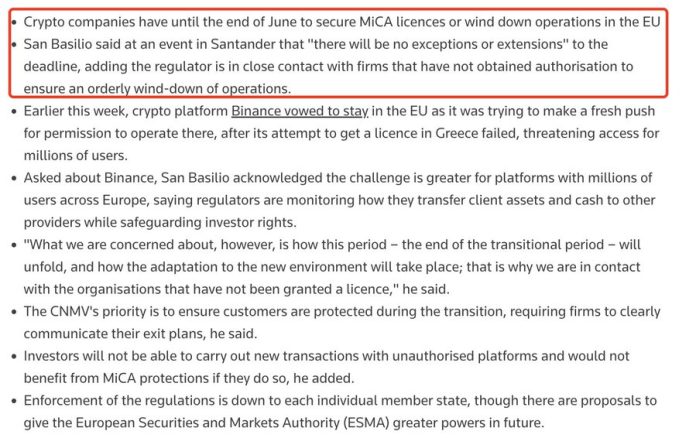
In the run‑up to July 1, 2026, Binance has announced that it will begin restricting its services for users in the European Union after the exchange was unable to secure a MiCA license before the regulatory transition period ends. The announcement marks a significant shift in the company’s strategy in the region and signals a broader tightening of crypto‑asset regulation across Europe.
The Markets in Crypto‑Assets Regulation, known as MiCA, is the European Union’s comprehensive framework designed to bring cryptocurrency service providers under a single regulatory umbrella. The regulation introduces a licensing regime that requires firms to demonstrate robust anti‑money‑laundering controls, governance standards, and risk management protocols before they can offer trading, custodial, or other crypto‑asset services to EU residents. MiCA also grants a transitional period until the first anniversary of the regulation’s entry into force, during which existing providers may continue operations pending approval of their license applications.
Binance’s decision to withdraw its MiCA license application in Greece, announced on June 24, followed months of negotiations with the Hellenic Capital Market Commission. The exchange cited delays and uncertainties in the review process and expressed its intent to pursue licensing in another EU member state. According to Binance, the withdrawal was a strategic move aimed at preserving user assets while the company seeks a suitable jurisdiction that aligns with its operational model.
Without a MiCA license, Binance will be unable to provide its full suite of services-including spot trading, futures, and staking-to EU customers once the July 1 deadline passes. The exchange has stated that it will directly notify affected users and outline specific actions required, such as account closures or transfers. While Binance has emphasized that user assets remain safe and accessible, it has also warned that it will not request passwords, two‑factor authentication codes, or private keys from customers.
Regulators have highlighted challenges in Binance’s licensing dossier, particularly around the firm’s anti‑money‑laundering compliance and the role of founder Changpeng Zhao. Although Binance has disputed the allegations, the lack of a formal decision from the Greek regulator has left the company in a precarious position. The European Securities and Markets Authority has not yet listed Binance as an authorized crypto‑asset service provider in its register, further underscoring the exchange’s current regulatory limbo.
For EU users, the practical impact remains to be fully disclosed. Binance has indicated that some accounts may be affected depending on the country of residence and the specific service used. The company’s upcoming communications will likely detail which trading pairs, derivatives, or wallet services will be suspended and the timelines for any required account actions.
Looking ahead, the broader crypto market will watch how Binance navigates the regulatory landscape and whether it can secure a MiCA license in another member state. The outcome could set a precedent for other global exchanges operating in Europe, signaling that successfully meeting MiCA’s stringent requirements is essential for continued market access. In the meantime, Binance’s EU users are advised to monitor official announcements closely and prepare for potential service limitations that could affect trading strategies and portfolio management.