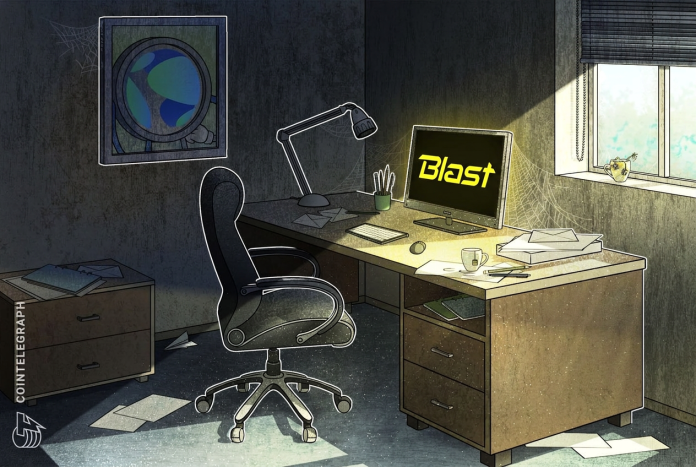
Blast, once ranked among the largest Ethereum layer two solutions by total value locked, has announced plans to wind down operations after determining that infrastructure costs have consistently outpaced generated revenue. The decision marks a significant moment in the evolving layer two landscape where economic sustainability has become as critical as technical performance. Users are being advised to bridge assets back to Ethereum mainnet ahead of the scheduled cessation of network services.
The network launched with considerable fanfare and quickly attracted billions in deposited assets through an innovative yield mechanism that passed through Ethereum staking rewards and T-bill yields to users. This approach differentiated Blast from competitors that relied primarily on token incentives to bootstrap liquidity. However, the underlying economics proved challenging as the cost of posting transaction data to Ethereum mainnet, maintaining validator infrastructure, and funding ongoing development exceeded the sequencer fees collected from network activity.
Industry analysts note that Blast’s situation reflects broader pressures facing layer two networks in the current market environment. With Ethereum’s Dencun upgrade significantly reducing data availability costs through blob transactions, the competitive dynamics have shifted. Networks that launched before these improvements face legacy cost structures that are difficult to reconcile with the new fee paradigm. Additionally, the proliferation of layer two solutions has fragmented liquidity and user attention across dozens of competing platforms.
The shutdown process will be executed in phases to ensure orderly withdrawal of user funds. Smart contracts governing the bridge to Ethereum mainnet will remain operational throughout the transition period, allowing users to exit positions without time pressure. The team has committed to maintaining block production and RPC endpoints until all deposited assets have been claimed or the designated deadline arrives. This approach contrasts with abrupt closures seen in other crypto projects and demonstrates responsible wind-down management.
For the broader ecosystem, Blast’s exit serves as a case study in the importance of sustainable tokenomics and realistic revenue modeling. The layer two sector is likely to see further consolidation as networks with clearer paths to profitability absorb users and liquidity from less viable competitors. Projects that can demonstrate genuine utility beyond yield farming incentives will be better positioned to survive the inevitable market shakeout. Developers building on layer two infrastructure should evaluate the long-term viability of their chosen platform as part of standard risk assessment.
Users holding assets on Blast should initiate withdrawals to Ethereum mainnet at their earliest convenience to avoid potential complications as the shutdown deadline approaches. The bridge interface remains fully functional and the team has published detailed guides for the withdrawal process. Those with positions in decentralized finance protocols deployed on Blast should also review each protocol’s specific migration plans, as some may choose to redeploy on alternative layer two networks rather than return to mainnet.