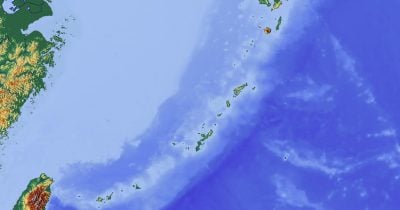
Recent satellite observations and open‑source intelligence confirm that the People’s Republic of China has expanded its naval footprint east of Taiwan. New deployments include additional surface combatants, amphibious landing ships, and unmanned surface vessels operating in waters that have traditionally been contested by Taipei and its allies. This development arrives at a moment when Manila and Tokyo are forging tighter diplomatic and security ties, a trend that reshapes the strategic calculus across the western Pacific.
The escalation of China’s maritime presence directly challenges the status quo of the Taiwan Strait, a corridor that has long been a barometer of cross‑strait relations. By projecting power into the eastern approaches of Taiwan, Beijing signals both its capability and willingness to assert dominance beyond the immediate perimeter of the island. Analysts interpret this as a rehearsal for more aggressive maneuvers, potentially lowering the threshold for a forced unification scenario. The proximity of Chinese vessels to Taiwan’s critical sea lanes also raises concerns about the safety of commercial shipping, energy transport, and the broader supply chain that underpins the global economy.
Concurrently, the Philippines and Japan have signed a series of agreements aimed at bolstering maritime security, intelligence sharing, and joint exercises. These arrangements are designed to counterbalance China’s assertiveness and to assure regional partners of a collective response to any destabilizing actions. The deepening of Manila‑Tokyo cooperation reflects a shared perception that the security architecture of Southeast Asia must evolve to address the growing threat posed by China’s expansionist policies.
From a geopolitical perspective, the convergence of Chinese naval buildup and the strengthening of Philippines‑Japan ties creates a complex risk environment. On one hand, heightened deterrence may discourage Beijing from undertaking overtly hostile actions against Taiwan. On the other hand, the increased militarization of the area could trigger miscalculations, especially in narrow maritime corridors where navigation rights are already disputed. Historical precedents suggest that such flashpoints can quickly spiral into broader confrontations if diplomatic channels fail to mitigate tensions.
For investors and participants in the cryptocurrency and decentralized finance sectors, the ramifications of these developments are not purely theoretical. Geopolitical instability often translates into market volatility, prompting capital flows toward assets perceived as safe havens. Bitcoin and other digital stores of value have historically experienced price surges during periods of heightened geopolitical risk, as traders seek alternatives to traditional fiat currencies that may be exposed to sanctions or currency devaluation. Moreover, the potential for sanctions against entities involved in the maritime expansion could accelerate the adoption of blockchain‑based compliance tools, which offer transparent transaction monitoring while preserving privacy.
Strategically, stakeholders should monitor three key indicators: the frequency and scale of Chinese naval deployments east of Taiwan, the depth of operational coordination between the Philippines and Japan, and the response of the United States and its allies to these moves. Each factor will influence not only regional security but also the macroeconomic environment that underpins cryptocurrency markets. A sustained escalation could lead to broader sanctions regimes, prompting a shift toward decentralized financial infrastructure that operates beyond the reach of traditional regulatory bodies.
In conclusion, China’s intensified maritime activity east of Taiwan represents a deliberate effort to reshape the power balance in the western Pacific. The concurrent strengthening of Philippines‑Japan ties introduces a counterweight that may deter overt aggression but also raises the specter of inadvertent conflict. Market participants, especially those active in the blockchain space, would do well to incorporate these geopolitical dynamics into their risk assessments, as the intersection of security policy and financial markets becomes increasingly pronounced.