
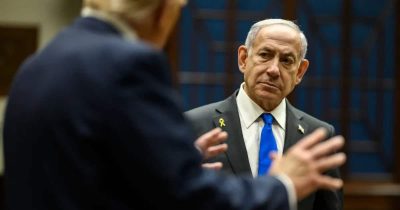
Israel’s recent escalation of military operations in southern Lebanon has reverberated far beyond the immediate region, stirring volatility in digital asset markets worldwide. The announcement that Prime Minister Benjamin Netanyahu will not consider withdrawal has reinforced the perception that the conflict could persist, amplifying risk for investors who seek stability in an increasingly complex geopolitical landscape.
For the NFT ecosystem, the impact is multifaceted. On one hand, the heightened uncertainty has prompted a surge in liquidity outflows from high‑risk assets, including speculative NFT collections that rely on continuous buyer engagement. On the other, certain creators and collectors have turned to NFTs with more tangible utility-such as tokenized real‑estate or fractional ownership of physical artworks-to hedge against market swings.
Market analysts note that the correlation between regional conflicts and crypto‑asset volatility has deepened in recent years. When geopolitical events spike, institutional capital often retreats to more liquid, lower‑risk vehicles. This dynamic has been observed in Bitcoin and Ethereum but is now extending to secondary layer assets that are more susceptible to market sentiment shifts.
In the midst of the Israel‑Lebanon conflict, several prominent NFT platforms have reported a measurable decline in transaction volumes. The drop is especially pronounced in projects that rely heavily on community participation, such as large‑scale generative art series. Investors appear to be favoring projects with established revenue streams, such as those offering staking rewards or royalties that provide a recurring income stream.
Conversely, the sector has seen a rise in “defensive” NFT strategies. Artists are increasingly embedding features that allow for resale royalties to be automatically distributed to holders, creating an incentive to hold rather than sell during turbulent periods. Additionally, some galleries are offering NFT-backed access to physical exhibitions, blending the digital and tangible worlds to mitigate the impact of market swings.
There is also a growing trend of geopolitical risk analytics being integrated into NFT investment platforms. These tools evaluate the exposure of digital asset portfolios to regional tensions, allowing investors to adjust their holdings in real time. This approach mirrors traditional financial risk management practices but is still in its infancy within the crypto space.
Looking ahead, the duration of Netanyahu’s stance on withdrawal will play a pivotal role in shaping market sentiment. Should the conflict extend, the NFT market may experience prolonged periods of caution, with a shift toward high‑utility projects and away from speculative drops. Conversely, a swift de-escalation could restore confidence, leading to a rebound in liquidity and renewed interest in high‑profile NFT drops.
In summary, the Israel‑Lebanon conflict underscores how geopolitical events can ripple through the NFT ecosystem, influencing investor behavior, project viability, and market structure. Stakeholders who remain vigilant and adaptive to these macro‑economic shifts will be best positioned to navigate the evolving landscape.

