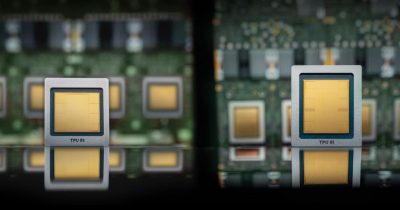
Google’s aggressive expansion of Tensor Processing Unit manufacturing represents a pivotal moment for the intersection of artificial intelligence and decentralized finance. Industry projections indicate TPU volumes could reach nine million units by 2027, a threefold increase that fundamentally alters the cost structure for training and deploying machine learning models at scale. This development carries profound implications for blockchain networks that rely on AI-driven optimization, risk assessment, and automated market making.
The semiconductor supply chain has long been a bottleneck for computational innovation across both centralized and decentralized systems. NVIDIA’s dominant position in GPU-based AI acceleration created a de facto monopoly on high-performance training infrastructure, driving up costs for protocols seeking to integrate machine learning capabilities. Google’s vertical integration strategy, which combines custom silicon design with massive data center deployment, introduces a credible alternative that could reduce compute costs by thirty to fifty percent over the next three years.
For decentralized finance applications, cheaper AI compute translates directly into more sophisticated on-chain analytics, improved oracle accuracy, and enhanced risk modeling for lending protocols. Yield optimization strategies that currently require off-chain computation can migrate closer to the execution layer, reducing latency and trust assumptions. Insurance protocols leveraging machine learning for parametric claims assessment will benefit from lower inference costs, enabling more granular pricing models across diverse asset classes.
The competitive pressure on NVIDIA also accelerates the open-source hardware movement, which aligns closely with crypto’s ethos of permissionless innovation. Projects like RISC-V based accelerators and decentralized compute networks such as Akash and Render gain strategic relevance as the market diversifies away from single-vendor dependency. This diversification reduces systemic risk for protocols that have built critical infrastructure on proprietary hardware stacks.
Regulatory considerations add another layer of complexity. As AI compute becomes a strategic national resource, export controls and data localization requirements may fragment the global market. Decentralized networks with geographically distributed nodes offer natural resilience against such fragmentation, potentially positioning crypto-native compute platforms as the preferred infrastructure for compliant AI workloads across jurisdictions.
Market participants should monitor the pace of TPU deployment relative to software ecosystem maturity. Google’s JAX framework and associated tooling must achieve parity with CUDA’s developer mindshare for the hardware advantage to materialize fully. Meanwhile, NVIDIA’s response through next-generation architectures and pricing adjustments will determine the timeline for meaningful cost reductions. The ultimate beneficiaries will be protocols that maintain architectural flexibility to leverage the most efficient compute substrate available at any given moment.