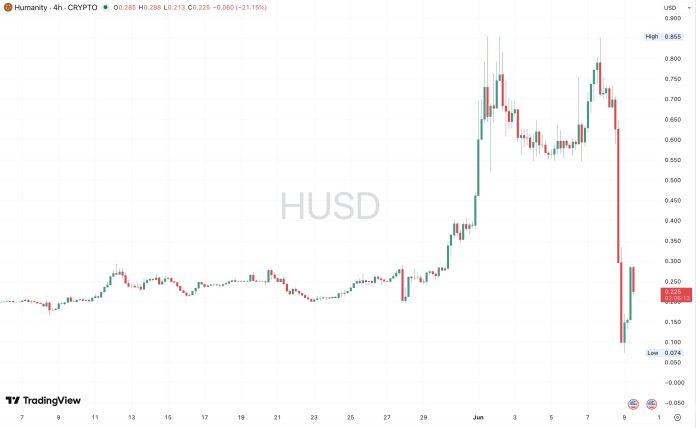
The H token, the native asset of the Humanity Protocol, experienced a catastrophic price collapse on June 9, falling more than 80% after the project disclosed a sophisticated private‑key compromise that enabled the theft of over $36 million worth of tokens. The incident, which unfolded across Ethereum and BNB Smart Chain, exposed critical operational weaknesses that allowed attackers to drain admin wallets, upgrade bridge contracts maliciously, and create an unauthorized surge of 300 million new H tokens on BSC.
According to the post‑mortem released by Humanity, the breach began on June 8 and was fully exploited by June 9. Three distinct attack vectors were identified: a direct theft from an admin hot wallet, a bridge drain on Ethereum, and the unauthorized minting of 300 million H tokens on the BNB Smart Chain. All three were made possible by malware that had infiltrated an internal machine, which had been mistakenly used to back up multiple production private keys during the mainnet launch in June 2025.
The root cause was traced to a device that had obtained root access through malicious software. Because production keys were stored on this compromised machine, the attacker gained the ability to sign transactions on both chains. On Ethereum, the attacker seized control of the Bridge ProxyAdmin, upgraded the bridge to a malicious version, and executed a single transaction that withdrew 141.18 million H tokens. An admin hot wallet was also drained of an additional 6.05 million H tokens.
On BNB Smart Chain the damage was even more severe. The attacker compromised the ProxyAdmin of the BSC H token contract and minted 300 million new H tokens across three iterations on June 9. This sudden increase in supply pushed the total circulating H on BSC from approximately 141.12 million to 441.12 million, tripling the token’s supply on that chain. The attackers then dumped the newly minted tokens into the market, contributing to the sharp price decline.
Unlike a traditional smart‑contract bug, this exploit hinged on operational security failures. The attacker was able to sign legitimate transactions because the private keys were already valid; the breach turned a simple key‑storage error into a full‑blown control of the bridge and token administration across multiple networks. This distinction is crucial for investors and developers alike, as it highlights the importance of secure key management practices in addition to contract audits.
The market reaction was swift and severe. Prior to the incident, H had been on an upward trajectory, rising from around $0.20 in late May to nearly $0.86 in early June. Within hours of the breach announcement, the token slid below $0.10 on several exchanges, with the lowest recorded price falling to $0.074 before a minor recovery to the $0.16‑$0.22 range. The sharp decline reflects not only the massive sell‑off triggered by the attacker’s dump but also heightened supply risk after the unauthorized minting event.
In the wake of the incident, the Humanity team has pledged to strengthen its security protocols, including isolating key storage from any device that can be compromised, implementing multi‑factor authentication for all admin operations, and conducting an independent audit of the bridge and token contracts. The incident also serves as a stark reminder for the broader NFT and DeFi communities: robust operational security is as vital as code security when safeguarding digital assets.