The Nfts space continues to evolve rapidly, with recent developments highlighting both opportunities and challenges for market participants. Understanding these dynamics is essential for anyone following this sector.
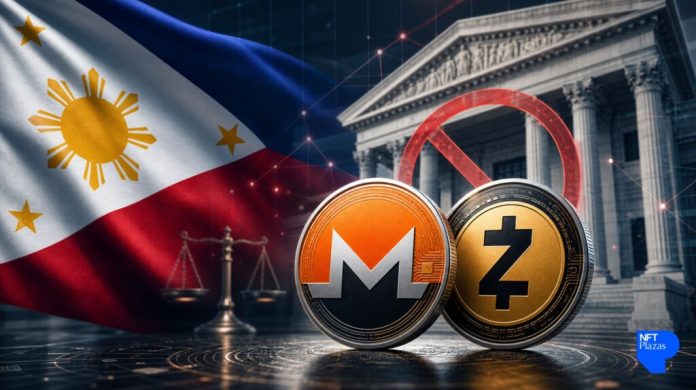
The Bangko Sentral ng Ngipinas (BSP) is tightening oversight of licensed virtual asset service providers that support privacy coins under a new set of crypto regulations, aiming to mitigate the risks of money laundering, terrorist financing, and untraceable transactions. The move applies to Virtual Asset Service Providers (VASPs) supervised by the BSP, marking the next step in the Philippines’ efforts to bring the digital asset market under the same regulatory standards as remittance and cross-border payment services. Privacy Coins Face New Limits The Philippines is tightening control over highly anonymous digital assets, with privacy coins becoming the most scrutinized group due to the difficulty of meeting regulators’ requirements for identity verification and transaction monitoring.
For BSP-licensed VASPs, the risk lies in the fact that these tokens can conceal the sender, recipient, transaction value, or remittance history. The mentioned group of privacy coins includes Monero (XMR), Zcash (ZEC), Dash, and assets utilizing privacy-enhancing technologies. This move does not target the entire crypto market but focuses on restricting untraceable tokens within the licensed service system.
The BSP has long warned that virtual assets can facilitate faster and cheaper money transfers but come with risks due to their high degree of anonymity, high transaction speeds, price volatility, and global accessibility. Why VASPs Should Care This move is notable because the Philippines is one of the major crypto markets in the region. Chainalysis ranked the country 8th in the 2024 Global Crypto Adoption Index, while personal remittances to the Philippines reached approximately $38.34 billion in 2024, equivalent to 8.3% of GDP.
For users, the most visible change is that the ability to buy and sell tokens like Monero or Zcash on licensed exchanges may be narrowed. This will not eliminate the demand for privacy coins, but it could push a portion of transactions out of monitored channels. For crypto businesses, a license in the Philippines is no longer just a story of capital, KYC, or reporting.
How VASPs select tokens for listing will also face stricter scrutiny, especially regarding untraceable assets. The Compliance Thresholds The BSP has set specific compliance thresholds for VASPs. According to Circular No.
1108, these entities must perform customer due diligence for transactions of ₱5,000 or above. For virtual asset transfers of ₱50,000 or above, VASPs must collect and retain information on the sender and recipient, similar to the “travel rule” requirements in international wire transfers. For payouts exceeding ₱500,000, the BSP requires enhanced due diligence and only allows payments via check, direct transfer, or account-to-account transfer.
These thresholds demonstrate why privacy coins have become a sensitive point. If a token conceals wallet addresses, transaction amounts, or the links between transactions, it becomes difficult for VASPs to fulfill their
As the Nfts landscape matures, stakeholders should monitor regulatory developments, technological advancements, and market sentiment. The intersection of these factors will likely shape the trajectory of the industry in the months ahead.