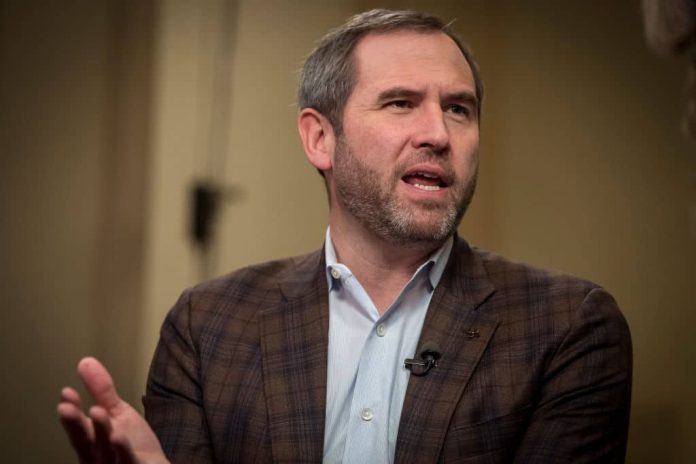
Ripple CEO Brad Garlinghouse has taken a sharp stance against JPMorgan Chase’s chief executive, Jamie Dimon, after the banking titan publicly questioned the merits of the proposed CLARITY Act. Garlinghouse’s rebuttal, delivered during a Fox Business interview, underscores the growing divide between traditional financial institutions and the burgeoning crypto ecosystem.
Dimon’s criticism surfaced earlier this month when he accused Coinbase CEO Brian Armstrong of driving the CLARITY Act forward for personal benefit. He argued that the bill would undermine the Bank Secrecy Act and make it easier for illicit actors to launder money. Garlinghouse immediately countered, stating that Dimon’s remarks misrepresented the legislation’s intent and were either a deliberate attempt to derail the bill or a gross misunderstanding.
“Jamie is either intentionally misrepresenting the purpose of this law or negligently trying to dampen its support,” Garlinghouse said. He emphasized that Armstrong, while a prominent figure, represents Coinbase’s interests, not the entire crypto industry. Garlinghouse also pointed out that the CLARITY Act is designed to clarify regulatory responsibilities, not to weaken anti-money laundering safeguards.
The clash gained additional traction when Dimon appeared at the Reagan National Economic Forum, where he reiterated that banks would not accept the bill in its current form. His remarks were swift, labeling Armstrong’s lobbying efforts as “full of shit.”
Economic commentator Peter Schiff echoed Dimon’s sentiment, arguing that stablecoin issuers should not be subject to the same banking regulations as traditional lenders. Schiff highlighted the FDIC insurance that banks enjoy versus the risk profile of fully backed stablecoins that invest exclusively in U.S. Treasuries.
Despite Dimon’s vocal opposition, the CLARITY Act continues to progress through Congress. The bill, which seeks to designate the Securities and Exchange Commission and the Commodity Futures Trading Commission as the primary regulators for different categories of digital assets, has already cleared the House of Representatives in 2025. It is now under consideration by the Senate Banking Committee, where questions around stablecoin yield provisions and potential regulatory arbitrage remain contentious.
Proponents argue that the Act will eliminate the regulatory gray area that currently hampers innovation and investor protection. Critics, primarily from major banking institutions, fear that the legislation could create loopholes that allow crypto firms to offer interest-like rewards without the stringent oversight applied to traditional banks.
As the debate intensifies, Ripple’s Garlinghouse stands firm in his defense of the crypto sector’s push for clearer, more streamlined regulation. His comments resonate with a broader industry narrative that the current regulatory framework is fragmented and often stifles technological advancement.
In the end, the outcome of the CLARITY Act will likely shape the trajectory of the U.S. crypto market for years to come. Stakeholders across the spectrum will need to watch closely as lawmakers balance the twin imperatives of fostering innovation and protecting consumers from financial crime.